
Personal alarm in Switzerland: emergency call systems for seniors
Help, even when the button is out of reach
A personal alarm connects seniors with help at the press of a button. But it only helps if the button is worn and pressed. Here you can find out how a personal alarm works, what it costs in Switzerland and how Assist Living detects falls automatically.
Personal alarms in brief
- A personal alarm (also known as a medical alert system) consists of a transmitter, a base station and someone who receives the alarm.
- Prices and conditions vary from provider to provider. Compare offers in writing.
- A transmitter only helps if it is worn and used. Contactless fall detection complements it.
How does a personal alarm work?
If the transmitter has a fall sensor, the alarm can be raised automatically when a fall is detected.
Wear the transmitter
You wear a transmitter on your wrist or around your neck.
Press the button
Pressing the button makes a call through the base station.
Help is organised
An alarm receiving centre or saved contacts take the call and organise help.
Talk directly
The hands-free function often lets you speak to each other directly.
Emergency alarms for the elderly: an overview of the options
Personal alarm with base station
A transmitter plus a device in your home, connected to an alarm receiving centre or to contacts.
Mobile emergency button and alarm watch
They also work when you are out, but they need a charged battery and mobile reception.
Transmitters with fall detection
They raise the alarm automatically after a fall, as long as they are worn.
Contactless fall detection
Sensors in your home, nothing to wear. This is the Assist Living approach.
Alarm watch or emergency button for seniors: which suits you?
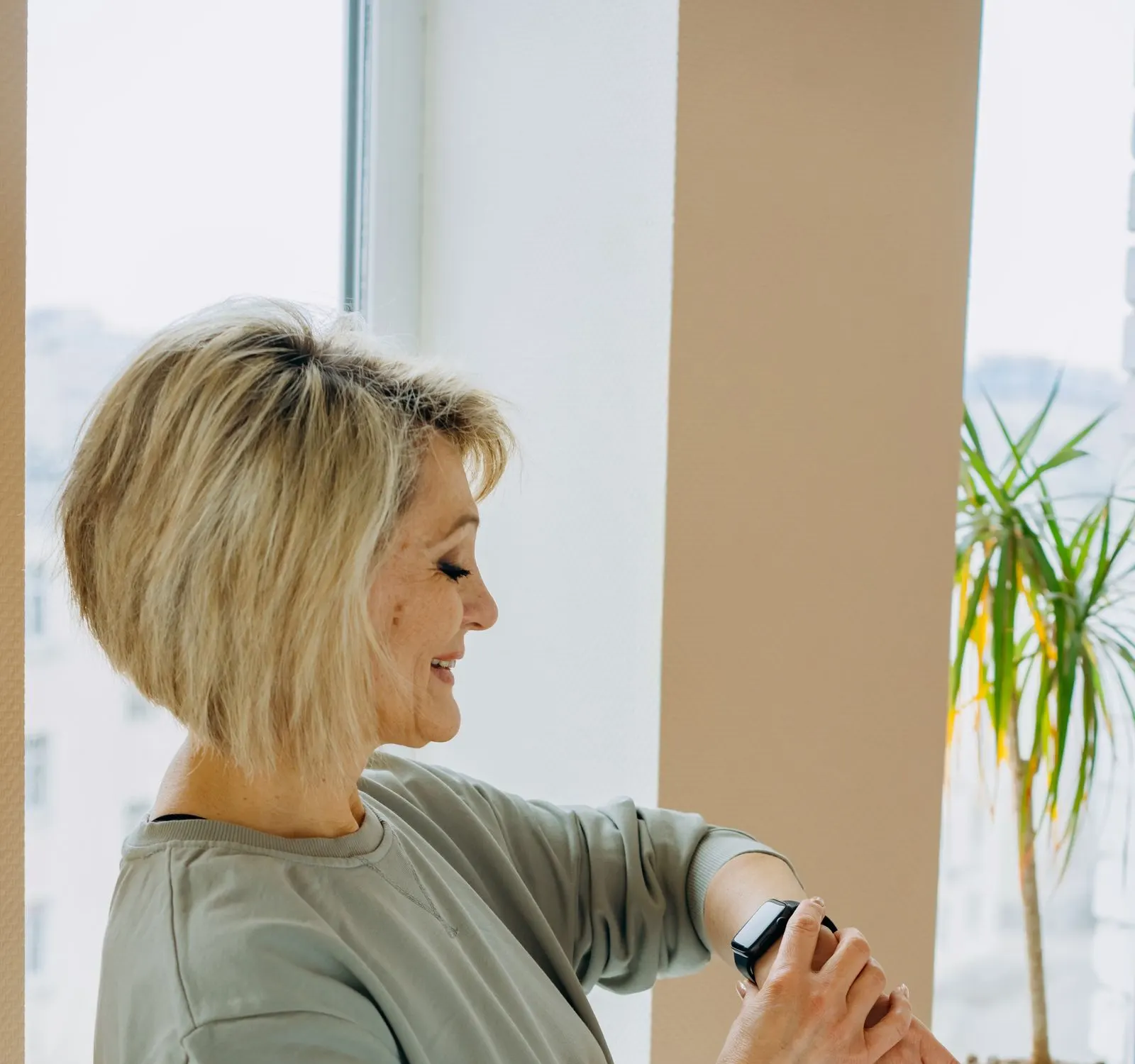
An alarm watch looks like a wristwatch and hardly stands out. Many models have GPS and a mobile connection, so they also work when you go for a walk or go shopping. An emergency button on a wristband or as a pendant is easier to use and often lasts longer on one battery. Both have the same requirement: you have to wear them and use them to raise the alarm in an emergency.
- Alarm watches for seniors suit people who are out and about a lot and like wearing a device on their wrist. The battery has to be charged regularly.
- An emergency button suits people who are mostly at home and want something simple to use. It also has to be worn in the bathroom and at night.
- Contactless fall detection is a good fit if a device on the body is not worn reliably, or if a fall could be so serious that no one can press a button any more. It works in your home, not when you are out.
You can combine the two: an alarm watch for when you are out and Assist Living for your home, including the bathroom and at night.
What a traditional personal alarm does and where it reaches its limits
A personal alarm usually consists of a transmitter on the wrist or around the neck and a base station. Pressing the button raises the alarm. Depending on the provider, it goes to an alarm receiving centre or to saved contacts. This is a proven approach and a good solution for many people.
But there are typical limits:
- The transmitter has to be worn, even in the bathroom and at night.
- After a fall, the button has to be within reach, and the person has to be able to press it.
- Anyone who is unconscious or in shock cannot raise the alarm.
- Some people refuse the device because it stands out.
- A test by the Swiss TV consumer programme Kassensturz criticised, among other things, buttons that were hard to use and a lack of water resistance (report from 2012, current models may differ).
How Assist Living complements an emergency call system
Assist Living works with mmWave radar and an AI camera with optical sensors in your home. The system detects a fall even when the person can no longer press a button, and it sends an instant alert to family members or carers. Find out more about automatic fall detection at home.
- Fall detection in all areas of the home
- Sleep monitoring with heart rate and breathing rate
- Intercom and voice control
- Medication reminders
- Active 24/7, with nothing on your body that needs charging
Assist Living supports family members and carers. The system does not replace human contact. It reports anything unusual. The assessment remains with healthcare professionals.
How does Assist Living differ from a personal alarm with an alarm receiving centre?
With a personal alarm linked to an alarm receiving centre, a person usually takes the call. Assist Living alerts the people you add in the family app. If you would like an alarm receiving centre, please talk to us about the options. We will give you honest advice.
Which personal alarm providers are there in Switzerland?
There are Red Cross organisations, telecommunications and insurance companies, as well as specialist providers and regional services. Check the services and conditions directly with each provider. We deliberately do not publish a ranking here, because offers change all the time.
What does a personal alarm cost in Switzerland?
There are one-off costs for the device and installation, and usually a monthly subscription. The amount depends on the provider, the range of functions (for example fall detection or mobile use) and the alarm receiving centre. We will only publish specific prices once we have current figures from the providers.
For Assist Living, we prepare a quote based on your home and your needs. Ask us using the form below.
Questions to ask when you compare offers:
- How much is the monthly subscription, and what is included?
- Is there a minimum contract period, and what is the notice period?
- Do you buy or rent the device?
- Who receives the alarm, and how quickly?
- Does the system work during a power cut?
- How does the provider deal with false alarms?
- Is the transmitter waterproof, even in the shower?
- How is your data handled?
Who pays depends on your situation. Possible sources are your supplementary health insurance, supplementary benefits (EL), your municipality or your canton. Check this before you sign a contract.
Privacy
No recordings, no image in the bathroom or bedroom
In the bedroom and bathroom, only radar is used, with no camera. In the living area, the optical sensors of the AI camera process everything locally in the home and store no video recordings. Authorised family members can briefly check in there with a live image, for example after an alert. This keeps your everyday life private.
Frequently asked questions
Does everyone need an emergency call system?
It makes sense for anyone who lives alone and might need help quickly after a fall or in another emergency. Our guide also shows you how to prevent falls.
What is the difference between an emergency button and fall detection?
The person presses the emergency button themselves. Fall detection raises the alarm automatically when the system detects a fall.
Is an alarm watch better than an emergency button?
That depends on your everyday life. An alarm watch suits you when you are out and about. An emergency button is simple to use at home. Both only help if they are worn and pressed. Assist Living detects falls in your home with no device on your body.
Do I have to wear anything with Assist Living?
No. The sensors are installed in your home.
Can I use Assist Living in addition to my personal alarm?
Yes. It adds contactless fall detection to an existing personal alarm.
What happens if there is a false alarm?
False alarms can happen with any sensor technology. We adjust the sensors to your home so that false alarms stay rare.
How much does a personal alarm cost in Switzerland?
That depends on the provider and the services. Ask for written quotes and compare the one-off and monthly costs.
Will my health insurance pay for a personal alarm?
That varies. Ask your supplementary health insurance and check whether supplementary benefits (EL) can help.
How much does a personal alarm with fall detection cost?
Usually more than a simple emergency button. Ask about the total cost.
Which is better: a personal alarm or contactless fall detection?
That depends on your needs. A personal alarm is a proven solution. The contactless solution works with nothing to wear. You can combine the two.
An emergency call system that helps even when no button is pressed
Request a consultationRequest a personal consultation
We will give you one-to-one advice on whether Assist Living suits your home and your personal alarm.
Thank you. We will get back to you shortly.
Please confirm that you are not a robot.
Too many requests. Please try again later.
Please check the highlighted fields.
Your message could not be sent. Please email us directly at info@assist-living.com.
Your message could not be sent. Please email us directly at info@assist-living.com.